Apr 16, 2026
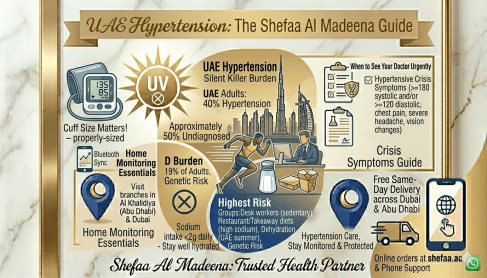
High blood pressure — hypertension — is the second most common chronic condition in the UAE after diabetes. An estimated 40 percent of UAE adults have hypertension, and roughly half of them do not know it. The condition is called a silent killer for a reason: it produces no obvious symptoms until it causes a heart attack, stroke, or kidney damage. Home blood pressure monitoring is one of the most effective tools for catching and managing it.
A blood pressure reading taken at a clinic is influenced by anxiety, rushing to the appointment, white coat hypertension, and the time of day. Home monitoring gives a more accurate picture of your average blood pressure across different times and situations. Research consistently shows that home readings are better predictors of cardiovascular risk than clinic readings. This is why most UAE cardiologists and GPs now recommend home monitoring alongside clinic visits.
Not all monitors are equal. Upper arm monitors are more accurate than wrist monitors for most adults. Look for a validated device — the British and Irish Hypertension Society maintains a list of validated monitors, and your Shefaa pharmacist can advise on which models meet this standard. The cuff size matters significantly: a too-small cuff gives falsely high readings, a too-large cuff gives falsely low readings. If your arm circumference is above 32 cm, you need a large cuff.
Bluetooth-connected monitors that sync to a smartphone app make it easier to track trends over time and share readings with your doctor. Several models stocked at Shefaa Al Madeena offer this feature.
Sit quietly for 5 minutes before measuring. Sit upright with your back supported, feet flat on the floor. Rest your arm at heart level on a table. Place the cuff on your upper arm, two finger-widths above the elbow crease. Do not talk or move during the measurement. Take two readings, one minute apart, and record both. Morning readings (before medication, before breakfast) and evening readings give the clearest picture.
Avoid measuring immediately after exercise, caffeine, a heavy meal, or smoking — all of these artificially elevate readings. Stress and pain also raise readings temporarily.
Normal blood pressure is below 120/80 mmHg. Elevated: 120 to 129 systolic with diastolic below 80. Stage 1 hypertension: 130 to 139 systolic or 80 to 89 diastolic. Stage 2 hypertension: 140 or higher systolic or 90 or higher diastolic. Hypertensive crisis requiring immediate medical attention: 180 or higher systolic and/or 120 or higher diastolic, especially with symptoms like chest pain, severe headache, or vision changes.
If your home readings consistently show Stage 1 or 2 hypertension, see your doctor. Do not wait for symptoms — by the time you feel hypertension, the risk is already elevated.
High sodium intake is a major driver of hypertension. UAE diets — particularly the high restaurant and takeaway consumption across the expat community — tend to be significantly above the WHO's recommended 2 grams of sodium per day. UAE summers add another layer of complexity: dehydration concentrates blood sodium levels, which pushes blood pressure higher. Staying well hydrated in summer is not just about comfort — it is cardiovascular protection.
Blood pressure monitors, replacement cuffs, and a full range of cardiovascular health supplements are available at all Shefaa Al Madeena branches and online at shefaa.ae. Call +971-54-279-7001 or message on WhatsApp for product advice before visiting.