Apr 15, 2026
The UAE has one of the highest diabetes rates in the world. Approximately 19 percent of UAE adults live with Type 2 diabetes — and a significant portion remain undiagnosed. Managing diabetes is a daily commitment that involves medication, diet, blood sugar monitoring, and regular professional support. Your pharmacist is one of the most accessible members of your care team, and using that access well can make a measurable difference in long-term outcomes.
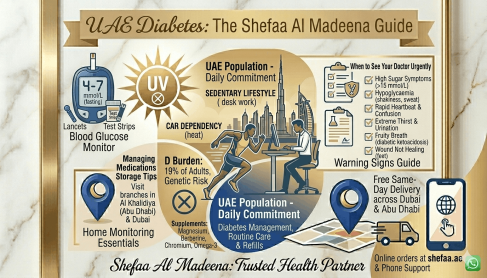
Several factors combine to create the UAE's diabetes burden. A diet high in refined carbohydrates and sugar — traditional Emirati cuisine alongside Western fast food — contributes to insulin resistance. A largely sedentary lifestyle due to heat, car dependency, and desk work reduces insulin sensitivity. Genetic predisposition is higher in Arab and South Asian populations, both of which make up a large portion of the UAE's residents. Stress from high-pressure work environments adds a hormonal component that directly affects blood sugar regulation.
The situation is not hopeless — in fact, Type 2 diabetes is one of the most manageable chronic conditions when approached with the right tools. And many of those tools are available directly from a pharmacy.
Most people visit a pharmacy primarily to collect their prescribed medication. But a pharmacist's role in diabetes management goes further. They can review your medication list for interactions — metformin combined with certain supplements, for example, can affect B12 absorption over time. They can advise on blood glucose monitoring equipment and which meters give the most accurate readings. They can help you understand your insulin storage requirements — particularly important in UAE summer temperatures. And they can flag when a symptom pattern suggests your medication dose may need reviewing by your doctor.
Shefaa Al Madeena stocks blood glucose meters, lancets, test strips, and logbooks for home monitoring. If you are newly diagnosed or switching meters, the pharmacist team can walk you through device setup and help you understand what your readings mean. Target ranges for most Type 2 diabetics are 4 to 7 mmol/L fasting and below 10 mmol/L two hours after meals — though your doctor will personalise these targets for your situation.
Certain supplements have evidence behind them for supporting blood sugar management alongside prescribed medication. Magnesium deficiency is common in diabetics — the kidneys excrete more magnesium when blood sugar is elevated — and magnesium supplementation has shown modest blood sugar benefits in studies. Berberine, a plant compound, has clinical data suggesting it can improve insulin sensitivity. Omega-3 fish oil helps manage the cardiovascular risk that comes alongside diabetes. Chromium picolinate has some evidence for improving glucose tolerance.
None of these replace prescribed medication. Always inform your pharmacist and doctor before starting supplements so they can check for interactions with your existing diabetes medications.
Contact your doctor or go to an emergency department if you experience: blood sugar consistently above 15 mmol/L, symptoms of hypoglycaemia (shakiness, sweating, confusion, rapid heartbeat) that do not resolve with sugar intake, unusual fruity breath or extreme thirst and urination — signs of diabetic ketoacidosis, or any wound on the feet that is not healing.
For routine diabetes care, prescription refills, and monitoring supplies, visit any Shefaa Al Madeena branch or order online at shefaa.ae. Delivery is free across Dubai and Abu Dhabi.