Apr 13, 2026
The vitamins and supplements market in the UAE has grown into a billion-dirham industry. Every pharmacy, supermarket, and health store stocks hundreds of products, and online platforms have made it even easier to order supplements without ever leaving home. The problem is choice. Not every supplement does what the label says, not every brand is legitimate, and not every dose is right for your age, lifestyle, or existing medications.
This guide covers the vitamins and supplements that UAE residents most commonly need, why the UAE population has specific nutritional gaps, and how to buy safely from a licensed pharmacy rather than an unregulated source.
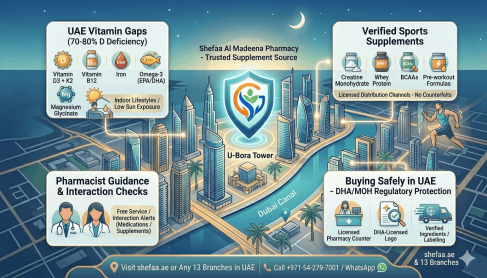
This surprises many people: despite living in one of the sunniest countries on earth, Vitamin D deficiency affects an estimated 70 to 80 percent of the Gulf population. The reason is simple — most residents spend the majority of their time indoors during the day due to extreme heat, drive rather than walk, and cover their skin when outdoors for cultural or practical reasons. The result is inadequate sun exposure, which is the body's primary source of Vitamin D.
Beyond Vitamin D, common deficiencies in the UAE include Vitamin B12 (particularly among vegetarians and vegans, who are a significant portion of the South Asian expat community), Iron (especially in women of childbearing age), Magnesium, and Omega-3 fatty acids. Diet habits — a mix of high-sodium processed foods, frequent restaurant eating, and low consumption of fatty fish — contribute to these gaps.
Vitamin D3 combined with K2 is the most effective form for absorption and bone health. Look for doses between 1000 IU and 2000 IU for daily maintenance, higher if your blood test shows deficiency. Vitamin B12 in methylcobalamin form absorbs better than cyanocobalamin, which is the cheaper version found in many budget supplements. Omega-3 fish oil should list EPA and DHA content separately — anything under 300 mg combined per capsule is not doing much.
Magnesium glycinate is better tolerated than magnesium oxide, which is the most common but least absorbed form. If you have been taking magnesium and not noticing any difference in sleep or muscle recovery, it is likely you were taking the wrong form.
Dubai's fitness community is large and informed. The most used sports supplements are whey protein, creatine monohydrate, BCAAs, and pre-workout formulas. Of these, creatine monohydrate has the most consistent scientific evidence behind it. It improves strength, endurance, and recovery across almost every type of exercise. Protein powders are valuable if your diet does not give you enough protein — most active adults in the UAE need between 1.6 and 2.2 grams per kilogram of body weight daily.
The risk with sports supplements in the UAE is authenticity. Grey-market products and counterfeit labels are common in informal retail. Buying from a licensed pharmacy like Shefaa Al Madeena means you are getting verified products that have gone through proper distribution channels.
The UAE Ministry of Health and the Dubai Health Authority regulate supplements sold through licensed pharmacies. When you buy vitamins from a pharmacy versus a gym store or an unbranded online seller, you have regulatory protection. The products have to meet labelling, ingredient, and safety standards to be stocked in a DHA-licensed outlet.
Shefaa Al Madeena carries a full range of vitamins, minerals, and sports supplements on its website at shefaa.ae and across all 13 branches. If you are not sure which product or dosage is right for you, the pharmacy team can give you guidance based on your health situation — no appointment needed.
Weight loss supplements claiming dramatic results, testosterone boosters without clinical backing, and herbal remedies sold without ingredient disclosure are categories that require caution. Some products in these areas contain undisclosed active ingredients that can interact with medications or affect blood pressure and hormone levels. Always disclose what you are taking to your doctor, especially before surgery or if you are pregnant.
A licensed pharmacist can help you check for interactions between supplements and any medications you are already on. This is a free service at Shefaa Al Madeena and one that can prevent problems before they happen.